Showing posts with label #books. Show all posts

Tuesday, May 28, 2024

Fierce winds, a jealous dog, and a couple of good books


Meet Chloe, the therapy dog

Benji didn’t even know it was time to get up this morning, because it was so dark outside. Texas continues to have fierce storms—more are due tonight. But this morning, the darkness and the heavy rain gave me a nice reminder of my mom. I could practically hear her voice saying, “Rain before seven, clear by eleven.” And sure enough, by eleven or a little after it was a lovely sunny day with blessed temperatures in the eighties. And it’s to stay that cool all week.

Benji had a spell of jealousy this evening, though he was, as he always is, good natured about it. The medical office where I had an appointment today had a therapy dog. That’s Chloe above—a lovely (and calm) two-year-old Aussiedoodle. At one point we heard a scratching at the exam room door, and the woman with us asked, “Do you like dogs?” Jordan and I assured her we do, so she opened the door, and in came Chloe with a ball in her mouth ready for us to throw. With the door closed and no place to throw the ball Chloe allowed us to love on her a bit and then lay down for a nice nap. Quite a contrast to Benji who jumped about wildly when we came home and then, a few minutes later, when Mary arrived.

Benji obviously smelled Chloe on me  and gave me such a thorough washing with his tongue that I nearly had to shower before I could fix my supper. Now he’s trying to get me to take an old artificial bone he loves. But I notice how rough it is, and I wonder if that means he’s chewing off particles, and we should take it away from him. At eight-thirty, it’s the hour when he settles down and lies next to my desk—unless something outside intrigues him. It’s probably my favorite time of the day—the soft lamp is on, along with the colored lights Jordan long ago put on a collection of pussy willow. They may look like Christmas, but I find them warm and comforting in the evening.

I read an interesting column today about reading habits and mental decline, the latter being a subject of much discussion today with our two aging presidential candidates. I have my own opinions on who is in mental decline and who isn’t—I bet you can guess!—but I won’t go into that. The suggestion in the column was that a switch from fiction to nonfiction might indicate a slowing of brain function. Fiction, the theory goes, requires active participation by the reader, using the imagination to engage with the plot and events of a story. Nonfiction on the other hand lays out facts that the mind can more easily grasp.


I would have thought the opposite. Recently I started the new Erik Larson book, The Demon of Unrest, about the period between the election of President Abraham Lincoln and the Confederate firing on Fort Sumter, South Carolina, which signaled the beginning of the Civil War. It was then a period when our democracy was as fraught and threatened as it is now. Larson’s research is superb, his writing clear and compelling. I found the tension of the foreword—waiting for the Confederate guns to bark out—almost unbearable. Nonfiction at its very best.

But it was not what I need right now. My mind has enough tension and suspense of its own—I don’t need to grapple with history.. Raher, I need escape, so I turned to an unread book on my Kindle; A Big, Fat Greek Murder, by Kate Collins. It’s a cozy, no deep dark problems (except murder) and it distracted me from my own situation. What I’m trying to say is that I found—and often find—fiction easier to read than nonfiction, less demanding on my brain. How about you? What kind of reading is easier, more relaxing for you?


Thanks to Kait Carson, who writes thrillers, often about deep sea diving, for bringing up this subject.

Sunday, April 07, 2024

A sort of nothing weekend


Usually I plan ahead and see that there are good things on my calendar for weekends, but this weekend? Nothing! It’s a bit of vanity to realize that one reason was that I couldn’t wash my hair. Sounds silly and frivolous but I think it’s true. I had that thingie removed from my scalp on Friday, and the doctor said to wait two days to shampoo. That was Friday late morning, so does Friday count as one of the days? I decided to err on the side of caution and wait until Monday. But my hair had Vaseline in it from the procedure and was generally a mess, and I was self-conscious about it. Tomorrow I am going to wash it first thing in the morning, and I expect the world to be a lot better.


We hoped to hear about the new dog we are interested in today—hear as in an invitation to greet and meet. But it didn’t happen. The wheels of dog adoption, like a lot of other wheels, move slowly. Having adopted four children, I should not be surprised at this slow procedure, but I guess I expected pet adoption to be easier. It’s probably a good thing for pets that it is not. The foster said she wasn’t able to get approval of my application today, so we wait (I am already conditionally approved). I was afraid that the poor boy was so attached to his foster that he wouldn’t want to be uprooted, but Jordan found out that agencies rotate dogs, not letting them stay too long with any foster for just that reason. I suppose that also cuts down on foster fail, where fosters fall so in love with the dog, they decide to be the permanent adoptive family. We did hear that the boy we have our eye on has been in foster care for two years, which makes me so sad I want to rescue him immediately. But we have also heard that he is afraid of “everything,” and that gives me pause. I had an experience with a fearful dog at Christmas when my granddaughter’s dog was afraid of my walker. And I want a dog with some spirit. So I am uncertain.

Weekends are usually good cooking times for me but that too went awry this weekend. I planned last night to make cod in a butter/lemon sauce, so with my grocery order I requested a lb. of cod. I got a quarter lb.—enough for no one else but me. We had garlicky chicken thighs in an anchovy/lemon sauce. Good, but I wanted to cook the fish, partly because I like fish and partly because I’d like to add more of it to our diet. Jacob has been wanting spaghetti, so tonight I made a recipe called Weeknight Bolognese. I can’t recommend it. I chose to make it on Sunday so I could cook all day, but the recipe really didn’t take that long—except for browning two-and-a-half lbs. of ground meat (beef and Italian sausage). I got wide pappardelle noodles, but the sauce wasn’t as rich and thick as I wanted. In fact, it was thin. Good flavor, but not what I want in an Italian sauce. And I thought it was way too much meat in proportion to the sauce. Jacob didn’t say anything, but I noticed he didn’t eat much. I’m going to plan soon to make an old-fashioned, Italian nonna kind of Sunday soup that cooks all day. Honest we could have used the bottled Rao marinara sauce Jordan bought, and it would have made me happier.

It's ten o’clock, and I have just had my second nap of the day. I relish my afternoon nap—it’s become a part of my routine, and I think it healthy. But when I fall asleep at my computer at eight-thirty, it’s a clear sign that I am not engaged in what I’m doing. So that too will have to change. I find I almost never want to go back and pick up where I left off—clearly I abandoned them because I wasn’t that interested. So I’m on a mission to find a book that absorbs my attention and calls me back.

All of this leaves me with a lot of resolves to kick up my interest in life. Fortunately, I understand that these dull, down periods are a part of life and are regularly more than balanced by periods of high activity and engagement. It’s up to me, so I resolve to be a new person (again!) starting tomorrow. Now who’s got plans for next weekend?


Sunday, January 21, 2024

An almost perfect day


No high drama, no hilariously funny situations, no exhilarating moments—just a day spent quietly at home with my nose in a book. It’s cold outside, Christian is fixing supper, I had leftovers for lunch, and nothing demanded my immediate attention. I even indulged in eggnog for breakfast—a habit I picked up in Santa Fe over Christmas, and I know better than to let it become regular. But there’s that big bottle Jordan bought staring at me every time I open the fridge.

Yes, I slept late, and yes, I “went” to church on my computer. And yes, I had a long afternoon nap. The only other thing I did of any consequence was to proofread the forthcoming edition of my neighborhood newsletter—at midnight last night, I was still scrambling to get last-minute articles and changes to the designed, so today I feel pleased that there weren’t more corrections than the scattered ones I found.

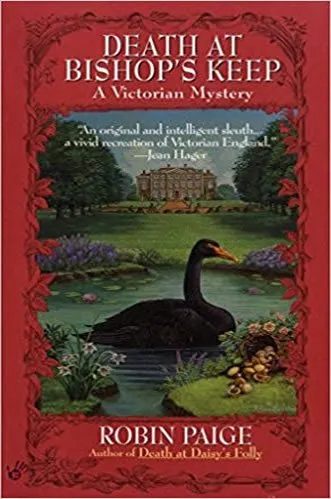
I’m reading Death at Bishop’s Keep, by Robin Paige, a pseudonym for my friend Susan Wittig Albert and her husband, Bill. They team wrote it, which is of great interest to me because I can’t imagine letting anyone else into my imagination as I crafted a novel. Susan tells me they edited each other’s work but, eventually, there had to be one editorial voice to achieve a consistent narrative style. She was the final voice editor.

Bishops Keep was published just after the first few of Susan’s signature China Bayles series, which intrigues me because I would think her writing style—the way she uses words—would have changed over thirty years. Critics often use the word “matured,” but that isn’t quite it—her style was never immature, but I think perhaps today it has a bit more subtlety. Part of that, of course, has to do with subject matter. It is perhaps easier to be subtle about current manners and ways than it is to go back over a century and recreate the social atmosphere of which most readers are innocent. And which sometimes now seem so—what? Trivial? Useless?

The time of Bishop’s Keep is late nineteenth-century England, the dwindling down of the Victorian era. Essex, to be specific. The book is a lot of things that don’t ordinarily attract me—British for one thing, life and restrictions among the landed gentry for another, the upstairs/downstairs/below stairs conflicts. But Kate Ardleigh, an American heroine—outspoken, independent, intelligent, and bent on being an author, which was unheard of in the day, especially in England—wipes out all my objections. Sir Charles—the English nobleman who dabbles in crime detection and the new science of photography—intrigues Kate to the point that she occasionally thinks maybe spinsterhood isn’t for her after all. It’s almost all standard Agatha Christie stuff (albeit a bit earlier) but it has me hooked, and I have spent a happy day mostly buried in the goings on at the Keep, surely a troubled household. My fascination is in large part due to Susan’s skill with character, even British, and structure.

These days I find I am more and more selective about what I read. Thanks to Amazon’s sample reading program, I often dip my bookmark into three or four books and withdraw it in disappointment. I long for that book that calls me back, tempts me away from the work I should be doing, keeps me up late at night. That’s probably why I read so much mystery, but even within the genre, I find disappointment. So I rejoice when I find such a book. Granted, that enchantment doesn’t always happen in the first twenty pages—you must persevere.

Bishop’s Keep is the first of, I think, twelve novels, and I’ll probably go on and read some of the remaining ones, though I'll not commit to all--maybe that's what happens to most series. (China Bayles, with twenty-seven books in print, is an exception). Once I am hooked on characters and their fictional world, I want to stay with them. So thanks, Susan, for a good reading experience and a lovely, self-indulgent day.

What about you, dear reader? What book has simply carried you away from your ordinary world, captivated you so that you crave every reading minute?

Friday, November 03, 2023

What are you reading?


If someone asked you how many books you read in the last year, could you answer? And if they pushed further and asked which three were your favorites, could you answer? I found myself answering those questions recently—and because I read Kindle digital editions almost exclusively, I had a fairly handy answer in my Kindle account.

I know some people scorn digital editions and wax eloquent about the feel of the book in their hands, the smell of a newly opened book. I understand all that, but I usually read at my desk—for goodness sake, I eat at my desk, phone there, practically live at my desk when I’m awake, so it’s not unusual that I read there, especially late at night. But I find putting a book on my desk and bending my neck to read is awkward and gives me a stiff neck. (No, I don’t know what I did all those years before Kindle). I also find the type is too small in some books and too crowded together. On my oversize monitor, text is straight in front of me and clearly legible.

As for reading in bed, forget it. I have never been comfortable doing that. When I go to bed, I go to sleep. Reading in bed would really give me a stiff neck.

Some people keep a reading journal, listing books by date, author, plot, and personal reaction. I think that’s a great idea, and some days I think I’ll start that. But I haven’t.

Back to the questions I answered. Shepherd.com is a website founded by avid reader Ben Fox to help people find the books they want to read. Fox solicited memberships from authors and readers and began listing books by favorite topics. We were asked, for instance, to dream up categories and list our favorite three books, so I listed my favorite Outrageous Cozy Mysteries.

When a call came to list my favorite three reads in the last year, I simply went to my Kindle directory and scrolled through what I’d read. Here are the three I picked: https://shepherd.com/bboy/2023/f/judy-alter. It interested me that none of my favorites made the list of books most often cited. Here’s that list: https://shepherd.com/bboy/2023. I think I’m a bit proud that my books weren’t on the popular list. To me, it means I’m following my own personal tastes and not being swayed by what’s popular. You won’t be surprised that my list is heavily into food-related books. You’ll also find I read forty books last year—that was an estimate, and I expect it’s on the low side.

Several people in an online authors’ group also submitted to this list, and a bit of correspondence with them convinces me that I need to go back and give a second chance to a couple of authors I’ve previously decided against. One is Richard Osmond’s retirement center series where a group of four meet to discuss murder—and find themselves in the midst of real murder investigations. There are four books in the series, starting with The Thursday Murder Club. I started that once, guess I didn’t give it enough of a chance. So I will go back to it.

The other author I’m told I’d enjoy is Janet Evanovitch. I have real reservations about that, but it’s been so long since I read about Stephanie Plum that I’m not sure why. My memory tells me I thought it was over the top crude, but I do know that the grandmother in that series has lots of loyal followers. So I’ll try.

My one Janet Evanovich story: she spoke to a capacity crowd at TCU one night quite a few years ago, and my assigned job was to stand by the door of the ladies’ room so that she could have a moment of privacy between her talk and book signing. So there I stood, barring the door, when a woman came up to me and said, “I know who you are.” Well, yes, I preened a bit and thought, “She’s read my books.” No such case: she said, “You run the cash register at the Star Café.” She’d apparently caught me at what was then my Saturday night gig in a café owned by good friends. So much for fame.

So, to wrap this up, right now I’m reading, Guilt Strikes at Granger’s Store, the ninth Samuel Craddock mystery by Terry Shames. I really recommend this series. It will probably go on my favorites list next year.

In all that is so sad in our world these days, this struck me as particularly sad: I saw where a teenage girl had finally brought down the “magnificent’ buck she’d been stalking for years. She talked about what an honor it was for her to kill this buck. I know people who hunt for meat, but hunting for honor and glory strikes me as so wrong—and for a teenage girl. Besides, if she’s been stalking him for years, the meat will probably be tough and stringy. Why couldn’t she have let him live his life in splendor. Color me a soft heart.


Sunday, October 01, 2023

What I thought I posted last night


Oops! I thought I posted this last night, but apparently all that came through was the image. So now I've changed the image and will try again. The picture above is my oldest granddaughter several years ago reading in the rain--never too young to be a devoted reader.


Shepherd.com, a readers’ browsing site, has asked authors to choose and describe the three favorite books read in the past year. I liked the challenge and immediately began reviewing the books on my Kindle (if I didn’t read it on Kindle, it didn’t make this survey—my memory is not that good). First the site wanted to know how many books I’ve read since October 2022. The Kindle count seemed low, but I know that I average a book a year, so I took a guess at forty. Then for each book, the site wanted to know if I listened to the audio version of the book and if I read it as part of a book club. I never do either of those things, so that was easy for me.

Here are the three books I read and why I liked them:

Dinner with Ruth, by Nina Totenberg

Nina Totenberg spoke to three of my deep interests in this first-person account: politics (the inner workings of the Supreme Court), memoir, and food. I was fascinated by the up-close look at Justice Ruth Ginsberg in her later days and drawn by two conflicts: should Justice Ginsberg have resigned because of failing health and given President Obama a chance to appoint a justice, and where should Totenberg have drawn the line between responsible journalism and friendship. Memoir is currently a popular genre but difficult for some to define, and I am constantly looking for examles that go beyond self-flattery. This book gave a lively account of Totenberg’s own career along with her friendship with Ginsberg. The food—and lively company—at Totenberg’s dinner parties were fascinating.

The Secret French Recipes of Sophie Valroux, by Samantha Vérant

Recipes and gourmet menus alone make this book worth savoring and keeping, but I was charmed by the setting—an ancient chateau in France that is a tourist lodge with two restaurants, a vineyard, and wonderful gardens. Sophie, a disgraced chef in New York, flees to her grandmother Odette but finds responsibility and a whole new way of life. The contrast between her two worlds—New York and France—is nicely done, as is Sophie’s own inner conflict. The cast of minor characters brings delightful variety—two grannies are Sophie’s main assistants, along with an old, alcoholic man who is a genius with desserts. If the hint at romance is a bit formulaic, I overlooked it because I was so charmed by the people, the place, and the food.

The Star-Crossed Sisters of Tuscan, by Lori Nelson Spielman

I was fascinated by this tale that weaves together an ancient curse on an Italian family, a fierce nonna who has ruled her granddaughters, and an aunt who has been ostracized by the family. It’s hard for us to understand the power of of an ancient curse, but these women have lived with it their whole lives. They flaunt tradition and travel to Italy, with its lush gardens and marvelous food, from their stark Brooklyn neighborhood back to Italy. Refusing to accept the curse, they reveal its source—and the reason the aunt was banished. There’s a strong feminist note here, along with lessons in growth and self-confidence--and love. A slow start, but I loved this book.

And waiting for me tonight is a clever cozy mystery with just enough suspense: Stone Cold Killer, by Lena Gregory.

Nothing better than Saturday night with a good dinner (chicken tetrazzini tonight—remember that relic of the Fifties), a glass of wine, and a good book. What are you reading tonight?


Monday, September 25, 2023

The suddenness of it


A friend died yesterday. In the morning, before first service, he was at church drinking coffee. In the afternoon, he was gone.

I didn’t know Father Bruce Coggin well. Over the years we met occasionally because we had a few mutual friends. But recently he and I have had some good conversations in my cottage about the publishing world and what to do with all the things we’ve written. Father Bruce’s legacy includes an incredible amount of material, some published, some not—sermons, essays on history and the church, a memoir, travel pieces, accounts of growing up in a small Texas town and also of ten years spent teaching in Mexico, and a lot of miscellany. (You can find his published work by searching for Bruce Coggin on Amazon; the works include a book of selected writings by his grandmother, a remarkable woman way ahead of her time—Bruce saw himself in part as inheriting her writing ability and outlook on life. The book is A Soul Housed Up.)

Father Bruce was a gifted writer, with a clear style, an incisive wit, and an ability to see through the follies of mankind. He wanted to do something with all this work but wasn’t sure what. We talked about various possibilities, conversations that were as enlightening to me as they were to him. The last time we talked, he left with the enthusiasm of a man with a job ahead, one he was looking forward to. He was going to start with a web page, and a friend tells me he talked to her about it as recently as yesterday. I was looking forward to keeping up with his progress—and more conversation.

Sudden death is sometimes a blessing. The deceased is spared the pain, suffering, and indignity of a lingering illness. But it is devastating to those left behind. In this case, it seems especially tragic that a man is cut off when he had so much he was looking forward to accomplishing. Whether or not you want to believe that God had another, more important calling for him is up to you.

Not only do I mourn for this man, his family and friends, and the many former parishioners who are devoted to him, I am shaken by the suddenness of his death. I saw him less than a month ago; a friend tells me she had lunch with him a week ago; another friend talked with him about his web page Saturday; yesterday, he was at church drinking coffee, though apparently not feeling well. And then, suddenly he’s gone.

RIP Father Bruce. I hope you’re up there, finding God’s fingerprints in old and new places and writing furiously. And I hope someone down here publishes some more of your work.

Friday, June 16, 2023

A book recommendation, recognition of a literary icon, and the search or an absorbing read


Some time ago I wrote about outrageous cozy mysteries—those that require the reader to suspend disbelief because nothing so far-fetched, improbable, outrageous could happen in real life. If these stories were onstage, they might be called slapstick. I cited Lois Winston’s Assault with a Deadly Glue Gun, first in her Anastasia Pollock Crafting Mysteries. Amateur sleuth Anastasia learns her husband, supposedly on a business trip, dropped dead at the tables in Las Vegas, having lost every penny they had and with a mobster after him for gambling debts. Anastasia inherits the threatening mobster, her mother-in-law who is a card-carrying, outspoken Communist, and a parrot that quotes Shakespeare. An editor at a crafting magazine, she finds a body in her office chair, firmly attached by glue from a hot glue gun. See what I mean by outrageous? (Of course I included my own Saving Irene in the list.)

This week I read the latest of Anastasia’s adventures, A Crafty Collage of Crime, published today. Twelfth in the series, the book takes her on a honeymoon to Tennessee’s wine country where she and her superhero (really, he can almost stop bullets) husband stay at a winery owned by three whacky sisters who are true-crime addicts. When the sisters’ husbands start turning up dead, the local sheriff welcomes Anastasia’s help—seems everyone knows about her because of a true-crime podcast featuring her. Anastasia is the only one who doesn’t know about the podcast. What follows is a hilarious mix of tourists, wineries, an ex-con, crooked real estate deals, a corrupt politician, kidnappings, and cryptocurrency. It’s a wild and improbable pace and lots of fun. The action is sprinkled with Winston’s talent for the comedic. For instance, she refers to her first husband as “the Dead Louse of a Spouse.”

If some days it seems the world is too much with you, I suggest you read A Crafty Collage of Crime. You’ll probably want to go back and read the rest of the series. Anastasia is irresistible. 

In other book news, no one who follows the news, particularly in Texas, can have missed that Cormac McCarthy died this week. Texas Monthly solicited statements of praise from ten authors, everyone from Stephen King to Annie Proulx (author of Brokeback Mountain). He was a Texas icon whose literary reputation stands with our greats—Larry McMurtry, John Graves, even J. Frank Dobie. If Dobie established southwestern literature as a genre, McCarthy took it in a new and dark direction. McCarthy’s prose is amazing, his landscape passages breath-taking, and I know his reputation will endure. Someone who knows Texas literarature well once speculated on what Texas authors will still be read a hundred years from now—he didn’t mention McCarthy, but I’d add his name to the slim list.

All that said, I never read one of his books through. McCarthy saw a darkness in humanity that was too much for me. Violence, corruption, and always the shadow of mortality hung over his works. Perhaps the violence of his vision accounted for his reclusive lifestyle. I am glad to recognize his importance in the canon of Texas literature (and earlier that of Appalachia) and I regret his death, but I cannot call myself a fan.

Obviously, from the recommendation above, I like lighter reading. Yet this week, I’ve had a hard time settling down with a new book this past week. Perhaps I’m picky. One stretched the limits of satire too far for me, another was too slow for even a cozy mystery, still another threatened to delve into Nazi brutality and, like McCarthy’s dark vision, I can’t go there. And then there was one that quoted Gertrude Stein (an apron is an apron is an apron) and waxed eloquent on the sensuality of cutting into a pumpkin. No thanks. I’m prowling my Kindle for all those books I haven’t yet read.

What are you reading?

Sunday, January 15, 2023

Books and good food


Really, what more could anyone want than books to read and good food to eat. I had both today. It was another slow and lazy day for me. I slept to an unheard of nine o’clock, and when I finally got to my desk I did some quick email work and read some online news but then it was time for church—on the computer. I loved a couple of things about the service: in the invitation to worship, the congregational response, twice, was “We do not worship alone.” Sitting alone in my cottage, I found that comforting. The hymn of fellowship after the sermon was “Standing, standing, standing on the promises of God.” Our wonderful organist, Janet Pummill, played a rousing, lively version and what I could see on my screen but those in the congregation or the chancel couldn’t, was that Janet was bouncing around on her bench, rocking to the music! And during the invitation to communion, the Reverend Renee Hoke quoted her granddaughter’s idea of a proper toast: “Cheers to God!” Loved all that.

Otherwise the day was quiet. I meant to read some more of When Everything Changed, The Amazing Journey of American Women from 1960 to the Present, by journalist Gail Collins. I’ve only read the first part which details the status of women in 1960, but it’s interesting to me because I remember much of those days. In 1960, I was twenty-two years old and not aware enough to feel discrimination, plus I think as a student I was spared some of it. My ex was in those day supportive, and I never had to ask permission for anything. I find some of the tales of women who did have to ask horrifying. I was also pretty much unaware that I wasn’t supposed to have opinions—I had quite a few, as I do today, and I think I was vocal about them. I remember a powerful woman in our city who said, “I don’t mind bringing the potato salad, if I am guaranteed a seat at the table.” That’s always sort of been my mantra. But I am also aware that through my career I was paid less than a man in a comparable position would have been. And in the sixties, when I was in grad school on an NDEA Fellowship, there was talk that I and a couple of other married women should not be filling a slot that a man could have. We had husbands to support us—never mind that my fellowship paid more than his surgical residency.

But this afternoon, by happenstance, I clicked on an unread book in my Kindle library, Aftertaste: A Novel in Five Courses, by Meredith Mileti, and I was hooked. The first-person narrator, full of anger, recounts her life—and one awful episode—after she caught her husband with another woman. Now, she’s forced into anger management classes, with the prospect of jail for assault if she doesn’t show improvement. She’s also raising her eight-month old daughter alone. But as you can imagine, what drew me in is that she and the almost-ex own and operate a Manhattan restaurant, so there’s lots of food. But there’s also lots of anger. Not sure how long I’ll last with the anger, but for now I’m interested.

And speaking of food, some days I feel my blog is nothing more than a chronicle of “What I Ate Today.” But tonight, we had one of my favorite meals: marinated, air-fried chicken wings and drumettes. Some time ago I found a recipe for marinating the chicken in an olive oil/lemon/spice mixture and serving with another olive oil/lemon sauce, though I think the second sauce is redundant. It’s a team effort—I make the marinade and soak the chicken pieces in a large baggie; Christian cooks them in his air fryer, because I’ve never yet tried mine. They are delicious. Chistian fixed shaved Brussel sprouts with extra lemon to go with them.

Tomorrow is another holiday—this year it seems like every Monday is a holiday. That doesn’t make much difference in my world, although this week it means one day longer that Sophie is in the clinic and before we get the latest test results. But tonight, she ate a half cup of kibble and gave the vet tech kisses—a good sign. So tomorrow will find me at my computer, while the wonderful Zenaida puts my house back in order. The world goes on in its merry path, beset as we are with problems big and little. Despite politics and war and climate change, I feel good about life tonight. Hope you do too.

Wednesday, September 14, 2022

Books and cooks


My troublesome quiche.

I cannot figure out where these caps came from. They aren't in the preview.
But I am unable to change them. So sorry, folks. Really, I don't mean to shout.

I’m in search of the next book for my late-night reading. When I do that, I often check reader-friendly sites. One of those is Shelf Awareness, an online newsletter for booksellers. I glance at it daily, often clicking away without noting much of anything, but sometimes I find interesting tidbits. The other day two book titles, both for young audiences, caught my attention. The first was
Choosing Brave: How Mamie Till-Mobley and Emmett Till Sparked the Civil Rights Movement, a picture book by Angela Joy and Janelle Washington. Who knew that Till-Mobley became an activist after her son’s death, and it was her advocacy for justice that roused national indignation over the brutal murder of a fourteen-year-old boy. She once told a reporter that young Emmett had a speech difficulty, and she taught him to whistle while he collected himself. It was that whistle that got him killed.

Attack of the Black Rectangles, by A. S. King, is the other title that intrigued me. Sixth-grader Mac opens his copy of Jane Yolen’s The Devil’s Arithmetic only to find words inked out in black rectangles. When he protests, his father cautions him not to get involved, but his mother and grandfather have taught him to call out things that are wrong. Mac gathers some friends, and they go to the principal, but she doesn’t take them seriously either. No spoilers here, but this is a book that’s seems so timely in this day of redacted government documents and a call for governmental transparency. Plus I love the title.

Last night was quiche night in the cottage. I made a Quiche Lorraine, but with little room and no enthusiasm for making my own pie dough, I asked Jordan to buy a pre-made pie shell—and learned a big lesson. The recipe I was following came from Taste of Home, a source I usually find reliable. I gradually realized that the pre-made pie shell and the pie dish Jordan brought me from her kitchen (once my pie dish) were totally different sizes. The shell I had was much smaller. So I piled crumbled bacon in—actually I find it easiest to dice raw, slightly frozen bacon rather than cook it whole and crumble it. Then I added strips of Swiss cheese. I had thought I was getting a block but when it came it was slices, so I sliced the slices.

When I poured in the egg/milk mixture, the inevitable happened. I was careful not to let the liquid go over the rim, but when I lifted the pie shell to place it on a pan (so it wouldn’t run all over my toaster oven), it ran all over the butcher block I use as a work surface. The cottage has just a slight downward tilt toward the north, and the liquid headed north, under the wooden bowl that holds fruit and is so heavy I had to have Jordan hold it up while I wiped the bottom and the space where it had sat. And it dribbled onto my clean pants. And Sophie got a lick of two. What a mess.

But the quiche was a success—browned, beautiful, and delicious.

I relish leftovers. My neighbor, who grew up in a family of seven and said he ate enough leftovers to last a lifetime, won’t touch them. But I was ecstatic to have chicken casserole for lunch yesterday and quiche today. Guess what? Neither was as good as when fresh, particularly the quiche. I think that’s another argument for ether learning to make my own pie dough or hiring neighbor Mary to make it for me. Mary teaches online pie-making classes, so she’s an expert. I’m not.

But here’s a quick cooking hack that worked out well. I’m on my own for supper tonight, so I made tuna salad. I’d read a recipe that I didn’t like as well as the way I always do it, but it had two great ideas for tuna salad sandwiches. The first was to drizzle a bit of olive oil over it. I wasn’t sure that made a difference, but the tuna was really good. The other trick was to put potato chips on top of the tuna before you add the second slice of bread. And that was great. Adds a terrific crunchiness to the sandwich. Try it, you’ll like it.

Be sure to check my Gourmet on a Hot Plate blog tomorrow. I think I’ll talk about the sudden popularity of an old tradition—the charcuterie board. http://www.gourmetonahotplate.blogspot.com


Friday, July 01, 2022

Bookish stuff


It’s good when big publishers stand up for bookstores. Simon & Schuster has launched a campaign to help independent bookstores fight back in this time of banned books. Participating indies will receive “Read banned books” merchandising kits, with material to be used in stores and online. There will be special discounts for banned S&S titles, such as Maia Kobabe's Gender Queer. The publisher reports that in recent months the number of its titles banned and/or challenged has increased by 46%. The list includes such classic titles as Joseph Heller's Catch-22, Ray Bradbury's Fahrenheit 451, and Ernest Hemingway's The Sun Also Rises, along with a wide range of children’s and young adult titles, including are Judy Blume's Are You There, God? It's Me, Margaret, Jason Reynolds and Brendan Kiely's All American Boys, Stephen Chbosky's The Perks of Being a Wallflower, and many more.

The campaign will be a summer one in advance of Banned Book Week which is September 18-24.

Banning books is a funny thing—well, no not funny, because it limits minds, especially children’s. The first banned book I remember is Lady Chatterley’s Lover, which no doubt seems tame today. Published in Europe in the late 1920s and not in England until 1960, it was the last book written by D. H. Lawrence (think Sons and Lovers). When an unexpurgated version was offered in 1960 in Britain by Penguin, the publisher was tried under the Obscenities Publication Act. That law stated that if a publisher could prove literary merit, the suit would be dropped. Famous authors testified, Penguin was exonerated and sold three million copies. I remember reading it in college, but I didn’t find it particularly titillating. At the time of his death, Lawrence’s reputation was that of a pornographer who wasted his considerable talents. A sad end.

But you don’t have to be famous like Lawrence to feel the bite of censorship. When my first young-adult novel, After Pa Was Shot, appeared, an East Texas friend told me if her superintendent knew it was on the school library shelf, he’d yank it off. The offense? Use of the word “kike.” An offensive term, yes, but appropriate to time and place.

A review of a book titled Koshersoul: The Faith and Food of an African American Jew, by Michael W. Twitty caught my eye this week. Twitty examines the crossroads of two of the world’s most distinctive diaspora cultures: African Atlantic cooking and worldwide Jewish cooking. Twitty claims the two cultures come together to create a rich food heritage and provides recipes to prove it. He explores how food has shaped the passages of numerous cooks, including his own journey to Judaism. Black Jews, he tells us, are not outliers. I was really curious to see a list of recipes, but none was available, and the book doesn’t come out until August.

And this week, I received a royalty payment from Amazon for A Ballad for Sallie, a book written so long ago that I can’t remember when I wrote it. Probably in the eighties. The report showed a whopping seventy-six cents, which probably means two books sold. Most months, the report shows thirty-seven, and I sometimes wonder if Amazon does that just to keep the book in print, but then I remind myself they are not in the business of charity. I am sad that it’s so overlooked because I like that little book.

Set in Fort Worth, in the time of Longhair Jim Courtright and Luke Short, the story is told by Lizzie Jones, a street kid in Hell’s Half Acre—and that part is true, for back then a lot of children lived on the streets. Lizzie’s fate is entangled with that of Sallie McNutt who comes to town looking for her cousin—and finds he’s been shot. Sallie takes over her cousin’s store, and Lizzie tries to educate her in the ways of the streets while Sallie tries to gentle Lizzie. Woven in are the stories of Courtright, Short, and the great shoot-out, along with the founding of Fort Worth’s first orphanage. It’s based on history, with a few liberties taken. The ballad in the title was because I was at the time enamored of the music of cowboy balladeer Don Edwards—still am. I talked to him once about doing a song for the book, but it never came about. Don was a busy man.

Lizzie spoke the patois of the streets, and I remember the New York publisher who first published it had an editor who “corrected” all her grammatical slips. I had gotten over being afraid to correct New York, and I complained long and loud. And I won. Sallie tried to improve Lizzie’s speech, but that was a different matter. And of course there's a bit of romance when Sallie meets a rancher.

The cover, show above, has absolutely nothing to do with the story. New York designers sometimes have the most stereotypical ideas about life in the Old West.

Anyway, I think it’s a fine little book, if I do say so myself, and I hope more Fort Worth people will discover it. It’s available on Amazon in paper and hardcover and free on Kindle.

Happy reading!


Tuesday, April 05, 2022

Some books you might find interesting


In West Fort Worth, we have two iconic shopping malls—Hulen and Ridgmar. Because it is closer and a bit smaller, with stores I liked, Hulen was my mall of choice. Doesn’t that sound funny now? I have lots of memories of trailing kids through the department stores and up those twisting stairs. Perhaps the worst was the time Jordan, maybe five or six, decided to climb through the railing on the second level—and there she was, hanging outside in space. People rushed to her in alarm, but I had the sense to say, “Please leave her alone.” Then I spoke softly to her, and she, not at all flustered, climbed over the railing to land safely on the floor at my feet. I’m not sure today I could be that sanguine.

When they were teens, three of my four wanted to “hang out” at the mall (I can’t remember that Colin ever did), an event that I let happen but not without strict instructions and a lot of trepidation on my part. I’m not sure what I thought would happen, but probably I was convinced food courts were dens of iniquity with pedophiles lurking in every corner. And there was the time Jamie, just old enough to ride his moped around town (remember mopeds? How could I forget?), rode his to Hulen Mall (quite likely against my rules) and while he was inside, doing that dreadful hanging out, it was stolen. At something like one o’clock the next morning, we got a call from the police that the moped had been found abandoned at a gas station on the South Freeway. It was a bitterly cold, icy night, but we went out there—I imagine I took all the kids because there is safety in numbers, even if they are young. But we finally decided Jamie could not ride it home in those conditions. We secured it at the gas station and went back the next day.

So no, my memories of Hulen Mall are not good, and I haven’t been there in years—I’m pretty much an online shopper these days, and I understand the good shops have deserted the mall and it is sort of a ghost town. Same for Ridgmar Mall of which I have fewer memories, except for Neiman Marcus where I loved to eat lunch and a strange little restaurant—I forget the name—run by a friend. Nope, I am not a mall person.

Still I was interested today to read a review of Meet Me at the Fountain: An Inside History of the Mall. Author Andrea Lange considers the history of the mall, from the 1950s, when it was the nirvana of suburban shoppers, up to today when it is considered dead. But her text questions the predictions of demise, pointing out that malls continually reinvent themselves. She deals of course with nationally known ones—the Mall of America in Minnesota and North Park in Dallas (I was never as crazy about it as my kids). If you’ve lived through the mall era, you might find the book of interest.

Another book Fort Worthians might particularly like but one with a universal message is Carry-Out, Carry-On: A Year in the Life of a Texas Chef, by locally renowned chef and farm-to-table advocate Jon Bonnell. During the heigh of pandemic, Bonnell’s restaurant, bearing his name, flourished by providing family to-go meals for which customers lined up as early as three o’clock in the afternoon. Bonnell’s is strategically located on a bypass highway and with a good flow to its parking lot, both of which Bonnell says enabled his success. His downtown restaurant, Waters, did not fare so well, which he attributes to difficult access and traffic patterns and a reluctance of folks to go downtown. Bonnell’s book is essentially a story of perseverance despite hardships, disappointments, unbelievable difficulties. It speaks not just to restauranteurs but to all of us who survived pandemic—and might well have to do so again in the future. Jon Bonnell was determined to come out of pandemic on a positive note—and he did. Go eat his food, read his book. He’s a special kind of chef and person.

In spite of the subjects of deserted malls and pandemic-stressed restaurants, these books made me think once again what a great place to live Fort Worth is. But even if you’re not from my city, you’ll find some nuggets on them.


Friday, February 04, 2022

The importance of neighbors and a big anniversary for me


I'm going home!

This morning I was in that delicious space between thinking about getting up and actually doing it, when my phone rang. Not a familiar number, so I ignored it, although it nagged at me. When I turned on my computer, I found that neighbor Polly Hooper had called because Marissa Shuffield on Weatherbe Street had posted on her neighborhood listserv (next neighborhood over from ours) that a Cavalier King Charles Spaniel had wandered into her back yard. Polly was checking on Jordan’s dogs.

I couldn’t see how “the girls” could have gotten out, but I texted and called, left a message. No response, and I figured since we were snowed in, they were sleeping late. Wrong! Jordan finally called. Their front door blew open in the night (that alone scares me) and the dogs had wandered. Cricket on her little, short legs had gone over two long blocks in the cold, on snow-covered ice. When she called, Jordan had JuneBug and Christian had gone to retrieve Cricket. We are so grateful to Marissa and Polly—“the girls” are tiny and elderly and things could have been a lot worse without neighborly intervention.

"The girls," with Cricket on the left, JuneBug on the right

It was that kind of a week. I almost had a triple whammy—isolation due to covid exposure, ice and snow, and no internet. I had been “talking” to ATT all week, as I posted, and I got truly tired of that mechanical voice telling me to go to the web site when I had just told him I had no connection! Finally, twice, I talked to a real person: first one was a girl who said she cleared the connection, and it should be fine; it was briefly, and then out again. Finally a gentleman believed me that Smart Home Manager, for a monthly fee, was not going to do it. He would send a new router. Meantime, I had no Wi-Fi. It’s one thing to be isolated but quite another to be cut off from what is a rather active internet life. I was even afraid to write much because my computer gave me dire warnings about not being able to save. Who want to labor over a scene and then have it disappear into thin air?

An old trick surfaced in my mind, and I did a hard boot. Magic! It has worked ever since with a few brief interruptions that I was able to fix. I decided a hard boot is like a kick in the pants to the computer.

The ice and snow were pretty, even if I did feel trapped in a white world. We did not lose power, but I hear as many as fifty thousand households across Texas did. When I let Soph out Thursday morning, she left no footprints, so I knew it was ice and sleet. The snow came mid-morning, beginning with large, wet flakes and then becoming tiny, wind-blown ones. I’d eyeball it and say we got an inch. Sophie seemed to like it and spent some time lying on her belly on the patio—I’d have thought she be freezing, but apparently not.

I bet half the households in Texas had chili for supper last night. Christian made a big pot—his chili is always delicious, though he’s constantly looking for new ways to do it. And Jordan made chocolate chip cookies, so we ate well. The night before Christian was to be gone, so I planned to make scratch mushroom soup. But when Jordan heard mushrooms, she asked for stuffed mushrooms the way her grandmother used to do them. So that’s what she and I had for supper. I’m sure Jacob fed himself something else. So now I have a half pound of mushrooms left—trying to decide between a really tiny batch of soup or a frittata. Hemm. There’s that broccoli in the fridge ….

This is an important anniversary for me: five years ago today I got to come home from the rehab unit where I’d gone after my extensive hip surgery. My hip problem was unorthodox—I don’t think the surgeon had seen it before, and he had to invent his repair technic. When a nurse wheeled me down the hall people would look and say, “Oh, you’re ‘the hip.’ Nice to have any kind of fame, I guess. There was some doubt about the extent of recovery. So I am grateful to Dr. Jeffrey McGowan, and to the rehab people for all the progress I made, and I am beyond thankful that I am as mobile as I am (I do need assistance to walk, and I refer to my walker as my chariot). The people at the rehab facility were skilled and kind, but I felt like I was in a nursing home like my grandmother was in when I was a child. I was desperate to be home. So it was a happy day for me.

Chuckle for the day: why would someone post a comment on my blog that is a sales pitch for girls’ hoverboards. Do I look like I would ever get on a hoverboard? I remember one Christmas when all the grandkids got them, and we adults were in danger of being run down by an out-of-control hoverboard. But that was years ago, and I’ve heard nothing about them for a long time.

And the bright idea of the day: a high school in Arkansas has installed a vending machine—it dispenses books. A local bookstore keeps it stocked. When the battle lines over books in schools are so clear, I find this truly cheering.


Hoverboard on blog


Pictures: five years ago, day pass and home from rehab my beautiful girls

Tuesday, December 14, 2021

And so, Christmas really begins….


Our bountiful table


Jordan and I hosted our regular neighborhood ladies’ get-together tonight, but with a difference: it was a holiday potluck, and oh my! we all went overboard. The bountiful table is pictured above. Pru brought tenderloin sandwiches and marinated mushrooms; Mary, poire rouge (a wine concoction that everyone raved about, except I stuck to chardonnay—better safe than sorry) and a wonderful citrus tart with chocolate ganache and real whipped cream; Jordan fixed a cheese and salami platter and our family favorite salmon spread, and I added pickled herring (Jordan and Pru didn’t touch it, but Mary and I love it), and a goat cheese log filled with pesto and rolled in toasted sesame seeds (usually I burn one batch and then do a second, but this time I watched and was successful on the first try). A wonderful and satisfying meal.

And we exchanged gifts. I have gotten one or two gifts and put them aside, so tonight we opened all. Some great and good surprises. Remember that song, “It’s beginning to look a lot like Christmas?” That’s how I feel tonight. My cottage is brightly lit, my tiny fake fireplace blazes away, the outdoor lights are bright and beautiful, Sophie is calm and sleeping (she did filch the top half of my tenderloin sandwich!), and all is well in the cottage.

After we cleaned up, Jordan and I had sort of a conference call with Megan, doing some menu planning for the big Alter get-together. There will be at least eighteen of us this year—a wonderful resumption of tradition after last year’s Covid isolation. Everyone is self-testing a day or two before we get together, and we are being extra cautious. But I am looking forward so much to having all my children and grandchildren together.

Christmas aside, I ran into some trivia today that I can’t resist sharing. Here’s a quote that I liked:

Books have a soul.... A book that sits on a shelf is nothing but a bundle of paper. Unless it is opened, a book possessing great power or an epic story is mere scraps of paper. But a book that has been cherished, and loved, filled with human thoughts, has been endowed with a soul.

From The Cat Who Saved Books by Sosuke Natsukawa


The reasons this struck me so particularly today is that on Bookbub I saw an advertisement for a $1.99 version of the Iliad on Kindle. Maybe it’s just me, but something struck me as so wrong about that. I admit I have not read the Iliad in its entirety—I have read portions, I have studied about it, but I’ve never read it (in contrast to Beowulf which I actually had to read and memorize in graduate school—I think it’s a rite of passage). But to have that mammoth and classic work available in electronic form for pennies just seemed wrong to me. I guess I think it should be carved on rare tablets of stone. And no, it wasn’t abridged! Reminds me of the summer my oldest child swore to read Moby Dick. I don’t think he ever made it all the way through.

And then there are matters culinary: for your enjoyment, I suggest the newest wine on the market: Oreo. Seriously. It’s a cookie-flavored red wine from the Barefoot Wine people. They claim it has “flavors of chocolate and cookies and creme along with notes of oak," and "has aromas of chocolate, with natural flavors of blackberry and dark cherries for a smooth and lingering finish." I think I’ll pass.

No Oreo wine for you? You can try pastrami tacos. In Los Angeles, there’s a young couple who are mixing Jewish cuisine (hers) with Mexican from Guadalajara (his). Think matzoh ball soup meets caldo de pollo or chicken liver tostadas. When they met, he was a sous chef, she the lead line cook at a prestigious restaurant. During quarantine, they began to combine their cuisines, and apparently, they are the hit of those who know in LA. So far, they offer their menu three nights a week at Malli, a pop-up in a wine bar, but look for them to expand.

The wonderful world of food never ceases to amaze me, from a sumptuous Christmas potluck to a pastrami taco. And a little picked herring and live paté along the way.

Sunday, December 05, 2021

Sunday dinner…and some trivia


Spatchcocked chicken

When my kids were growing up, Sunday dinner was an event. My brother and his kids and assorted friends came for dinner, and sometimes I cooked for fifteen or twenty. Those were always joyous occasions. My brother would go around the table, and each person had to tell about their week. Lots of laughter. And always a special meal—I remember even doing turkey Wellington, a recipe I wish I had now. Once, when I tried an old country recipe for hamburger/cornbread casserole, my brother fixed me with a long look and asked, “Sis, is the budget the problem?”

These days, Sunday dinner is sort of special but get glossed over by other events, etc. Sometimes Jordan even suggests that our fridges and freezers are full, and we should have leftovers—that seems to me a violation of the social order, but I try to go along. Tonight, though I fixed a real Sunday dinner. Jordan was gone to an afternoon cookie party, and I had been warned that Christian had a major event last night, and I should not ask him for anything. But I talked to him on the side, and he agreed that we could spatchcock a chicken.

A friend asked me, via email, what my day held, and when I said I was hoping Christian and I could spatchcock a chicken, she replied she had no idea what that was. So in case you don’t know: you use kitchen shears to cut along the backbone of the roasting hen (not a fryer) and spread it open—that was the part I thought I could have done, but when I watched Christian do it, I realized it took more strength than I have in my hands. Then you open the chicken up, turn it breast side up, and press with both hands on the chest bone until you hear it crack. We had a five-pound hen, and it cooked in an hour. I slathered it with herb butter before baking, and it was moist and flavorful. Maybe the herb butter was a bit too salty, but that’s my only hesitation.

My dinner plate
with an enormous piece of chicken
but it was so good

I sided it with corn pudding, an old-fashioned dish that I’ve been longing for—and no, I don’t think my mom ever cooked it. It’s not something I remember from childhood. Tonight I used a “quick” recipe that includes a box of Jiffy cornbread mix. With corn kernels and creamed corn, it was quick and easy to put together, and delicious, albeit pretty rich and not good for the diet. Heavy with butter, eggs, and sour cream. My only problem was I underestimated the quantity—it wouldn’t fit in the largest casserole I have, which is not very big. I had to call into the house for a larger one. We also had lightly sauteed asparagus, a family favorite.

To me, this was what Sunday dinner should be. I enjoyed fixing it and eating it. Never mind that I got chicken grease down the front of my favorite pink T-shirt.

And on to the trivia of the day: I love reading book lists, bestseller lists of titles, two-sentence reviews. In other words, I like knowing the wide array of books out there in our wonderful book world. My Austin son-in-law is a real honest book collector, and I love finding titles for him. He will be deluged this Christmas, and I think I have enough ideas for two or three years of birthdays and Christmases. Today though I found a gem of a children’s book. I often find books that make me wish my children or grandchildren were little and would read this book. Today’s find as A Christmas Mitzvah, by Jeff Gottesfeld and Michelle Laurentia Agatha. If the cover is an indication, the illustrations in this book are delightful. It tells the story, based on a real person, of a Jewish man who each year at Christmas did the job of a Christian who wanted to spend the day with family. Over thirty years, the man pumped gas, waited tables, emptied bed pans, and did countless other daily jobs. Truly inspiring. And charming.

Books spinning off the Jane Austen canon are everywhere these days, though Stephanie Barron seems to dominate. She has a new novel entitled Jane Austen and the Year Without Summer. I hooted because I titled my first published novel A Year with No Summer. The marketing department at the NY publisher objected, saying “year” and “summer” were intangibles and kids wouldn’t identify The book came out as After Pa Was Shot, which led my mom to snort and say, “More violence!” And that was back in 1978. Apparently there really was a year without summer—1816—when severe cold swept across the northern hemisphere, causing food shortages. It was thought to be the after-effect of a catastrophic volcano explosion in Indonesia. Yes, even then we lived In one big world together. So much for isolationism.

Not to end on a sour note, but my latest pet peeve is magazines that insert perfurmed advertising pages. I do not want to be assailed to overly heavy or sweet aromas when I’m reading a food magazine. Yep, the offender was Bon Appetit.

And so we begin a new week, with Christmas drawing ever closer. I hope you have lots of good things on your calendar.